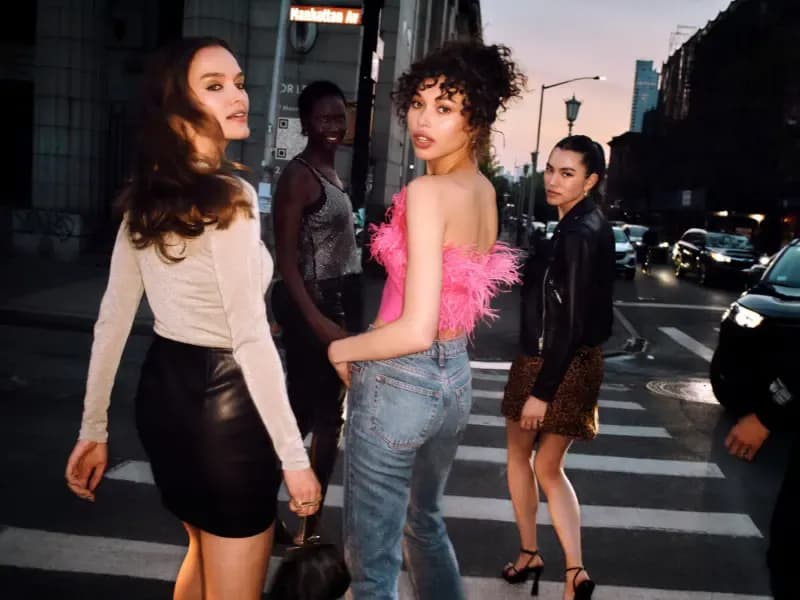
Your wedding morning sets the emotional tone for everything that follows. The laughter over coffee, the nervous excitement as the veil goes on, the collective inhale when someone sees the bride for the first time. These moments live in memory long after the last dance. But how you structure the hours leading up to your ceremony depends heavily on one decision most brides underestimate. Do you bring the beauty professionals to you, or does your bridal party head to a salon? The choice between a mobile glam service and a traditional salon visit ripples through your timeline, your budget, the comfort of your bridal party, and even the quality of the final look.
How the Getting-Ready Timeline Actually Works
Before comparing the two models, you need to understand the math that governs your wedding morning. Bridal hair and makeup typically takes four to six hours total for a full party. Individual bridesmaid services average about 45 minutes each for hair and 45 minutes for makeup. The bride herself needs 60 to 90 minutes per service, given the complexity of bridal styling.
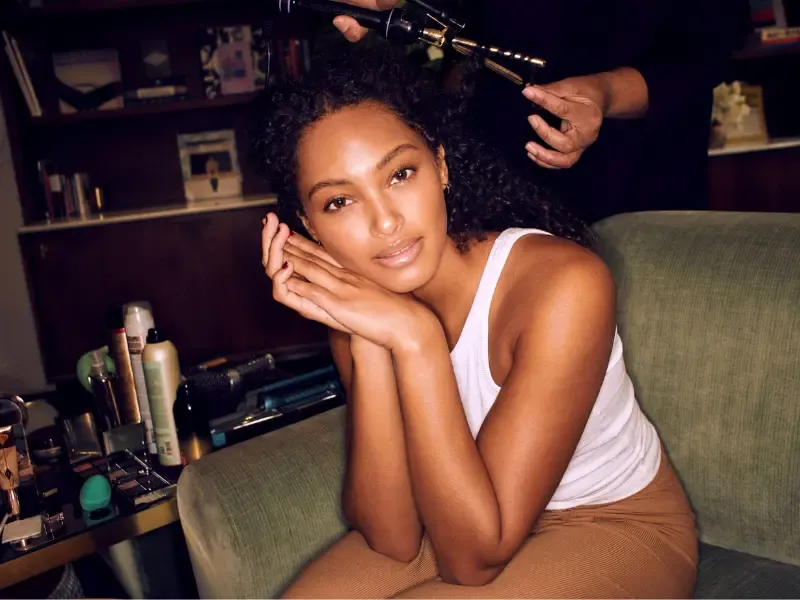
If you have six bridesmaids plus the bride, that's seven people needing both hair and makeup, which is 14 total services. With two artists working simultaneously, you're looking at roughly five hours of continuous work. Add a 30-minute buffer for touch-ups and inevitable schedule drift, and you need your first bridesmaid in the chair five and a half hours before the ceremony. This timeline pressure is the single biggest factor shaping your decision. A salon visit introduces transit time on both ends that a mobile service eliminates entirely. For a bridal party getting ready at a hotel 20 minutes from the nearest salon, that's 40 minutes of round-trip travel multiplied across the group, plus the stress of coordinating arrivals in a city you may not know well.
Wedding photographers and planners consistently recommend finishing all hair and makeup at least 90 minutes before the ceremony. That buffer accounts for getting dressed, first-look photos, family portraits, and the inevitable moment when someone realizes their earrings are in a different bag. Whatever option you choose, work backward from this 90-minute mark, not forward from when you wake up.
What Mobile Glam Services Actually Look Like
The mobile beauty model has evolved dramatically since it first gained traction in the early 2010s. What started as freelance makeup artists driving to clients has become a structured industry segment, with platforms like Glamsquad operating in 18+ cities and featuring bridal-certified professionals who average 7 years of experience in wedding beauty. Their team alone has completed over 12,000 bridal beauty services, underscoring how mainstream this model has become.
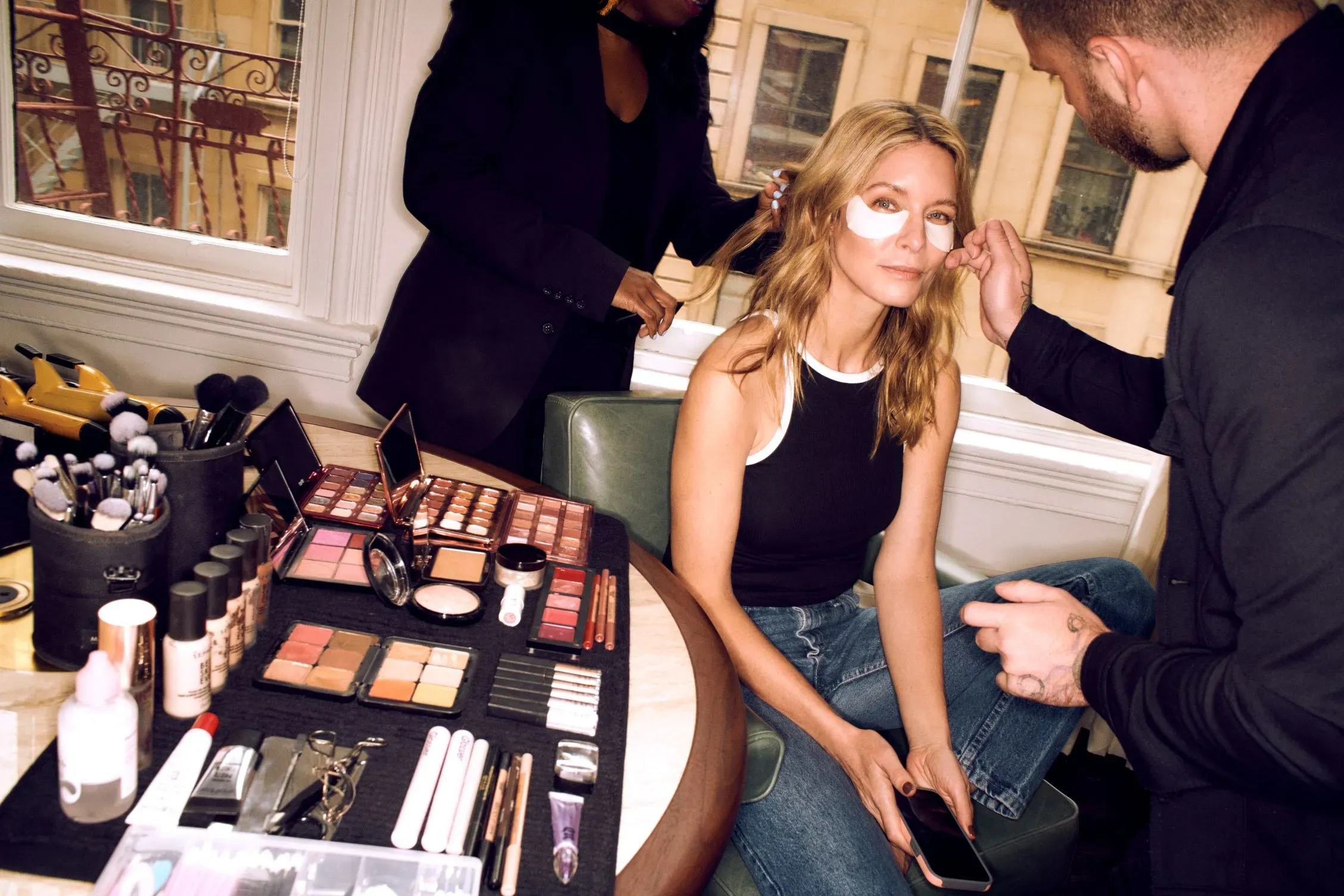
A typical mobile glam service works like this: one to three licensed professionals arrive at your hotel, Airbnb, or venue's bridal suite with full kits. They set up a temporary station and rotate through the bridal party on a pre-agreed schedule while everyone stays in robes, drinks coffee, and actually enjoys the morning. Some of their best candid shots come from the getting-ready hours: the laughing, the crying, the bridesmaids crowding around to see the bride's finished look. When everyone is in one room, those moments happen organically. When half the party is at a salon, and the other half is at the hotel waiting for their turn, the energy fragments.
The Logistics You Need to Confirm
Mobile doesn't mean effortless. Before booking any on-location service, verify these specifics with your venue or hotel:
- Electrical capacity: Two to three hot tools running simultaneously can trip a breaker in older buildings. Ask the venue if the bridal suite has dedicated circuits.
- Lighting quality: Warm, yellow-toned lighting can make it difficult to match the foundation. Artists experienced with on-location work bring portable LED mirrors, but ask about this during your trial.
- Space requirements: A good rule of thumb is one styling station per artist, each needing roughly a 4x4-foot footprint plus a chair. For two artists, you need a room that comfortably accommodates both stations plus seating for people waiting.
- Parking and access: Your artists are arriving with heavy kit bags, sometimes multiple rolling cases. Confirm elevator access, loading zones, and parking availability for several hours.
Ready to book your next appointment?
Book NowThe Salon Experience
Salon visits have been the default for decades, and there are legitimate reasons for that staying power. The most significant advantage is environmental control. A professional salon is designed for beauty work. The lighting is calibrated so that foundation colors read accurately, every tool and backup product is within arm's reach, and the electrical infrastructure can handle a dozen hot tools without flinching.
For brides who are particular about color matching, salon lighting can be a genuine advantage. Natural daylight-balanced bulbs and well-positioned mirrors eliminate the guesswork that sometimes comes with hotel room lighting. Makeup that looks flawless in a dimly lit room can photograph entirely differently under outdoor ceremony lighting.
The cracks appear as your party size grows. A salon appointment for eight people becomes a logistical operation: coordinating arrival times and throwing off the schedule. Depending on the weather, the drive, and the style, transit can genuinely compromise the work. An intricate updo in a convertible on a humid July morning is a recipe for a touch-up emergency. Soft curls and a fresh blowout are more resilient, but any style that relies on precise placement is at risk during a 20-minute car ride.
Breaking Down the Real Costs
Pricing is where most comparison discussions get vague.
- Bridal services (the bride): Hair ranges from $150 to $350, depending on complexity, while makeup runs $140 to $300. Most artists charge separately for trials, typically $100 to $250 per trial session. For reference, Glamsquad's bridal hair starts at $250 and bridal makeup at $275, with trials at $125 each, positioning them in the mid-to-upper range nationally while including in-home service.
- Bridesmaid services: Expect $75 to $165 per person for hair (varying by upstyle vs. downstyle) and $60 to $165 per person for makeup. For a party of six bridesmaids getting both services, that's roughly $810 to $1,980 for the group.
With mobile services, you'll often encounter a travel fee, and some artists require a service minimum to justify the trip. These aren't unreasonable, but they need to be in your spreadsheet. Tipping applies in both models. The standard is 16 to 20 percent of your total service cost. Budget an additional 15 to 25 percent of your final beauty spend for gratuities. When you run the numbers side by side for a party of six bridesmaids plus the bride, the total cost difference between mobile and salon is often smaller than expected once you account for travel fees on one side and transportation costs on the other. The real differentiator is what you get for the money in terms of convenience and stress reduction.
What to Evaluate During Your Trial
Your trial appointment is the single most important data point in this decision. Regardless of whether you go mobile or salon, use the trial to assess:
- Product longevity. Ask the artist to use the same products and techniques they'll use on the wedding day. Then live your life for 8 to 10 hours and photograph yourself under multiple lighting conditions. Does the foundation oxidize? Do the curls drop? This tells you more than any portfolio photo.
- Communication style. A great artist listens to your vision and offers informed pushback when something won't work. If you ask for a matte look and they explain that a satin finish photographs better in natural light, that's expertise. If they ignore your requests entirely, that's a red flag regardless of their talent.
- Time management. Track exactly how long each service takes during the trial. If bridal hair takes 75 minutes in the trial, budget 75 minutes on the wedding day.
How 2026 Bridal Beauty Trends Influence Your Choice
The dominant aesthetic this year is skin-first makeup. The luminous, natural-looking base works with minimal heavy coverage. Think champagne-lit radiance, soft satin lips, and dewy highlighter rather than full-coverage matte foundation and heavy contouring. This "less-is-more" approach is inherently more forgiving of on-location lighting conditions. When the goal is a natural, glowing finish rather than a precise editorial look, the margin for error in a well-lit hotel room narrows significantly compared to a complex, multi-layered makeup application.
On the hair side, 2026 trends lean toward modern updos with romantic texture. These are low buns with pearl accessories, sculpted waves that frame the face, and soft braided elements. These styles are portable and resilient, meaning they hold up well during the transition from getting-ready location to ceremony venue.
The personalization trend also matters. Brides in 2026 are increasingly requesting coordinated but not matching looks for their bridal party. Each bridesmaid has a variation on a theme rather than identical styling. This kind of customized approach is easier to execute when the artist can see the entire group together in one space, adjusting tones and techniques to complement different face shapes, skin tones, and hair textures.
Ready to book your next appointment?
Book NowMaking the Decision
Choose a mobile glam service if
Your bridal party has five or more people. The efficiency gains of keeping everyone in one location compound as group size increases. The travel time and coordination headaches of moving a large group to a salon rarely justify the salon's environmental advantages.
Your getting-ready location has a spacious, well-lit room. You need enough square footage for two styling stations, seating for people waiting, and room for a photographer to move around. Good natural light or the ability to set up supplementary lighting is essential.
The getting-ready experience matters to you. If you want those robe-clad, champagne-sipping, everyone-together moments, mobile is the clear winner. You can't replicate that energy in a salon waiting area. You're getting ready in a city you don't know well. Navigating an unfamiliar city on your wedding morning, in traffic, with a group of people in various states of readiness, is a stressor you don't need.
Choose a salon visit if
Your bridal party is small, like three to four people total. The salon's professional environment, lighting, and equipment advantages outweigh the convenience factor at this scale.
Your getting-ready space is limited. If you're in a small hotel room or a venue without a proper bridal suite, cramming in styling stations and multiple artists creates more stress than it eliminates.
Your look requires specialized equipment. Complex hair extension work, color correction, or elaborate styling techniques that rely on professional-grade infrastructure may be better suited to a studio environment.
What to Ask Before You Book Either Option
Whichever direction you lean, these questions separate a smooth wedding morning from a chaotic one:
- For mobile services: What is the travel fee and service minimum? How many artists will be on-site, and have they worked together before? What's the contingency if an artist has an emergency? Do they bring their own lighting and mirrors? Will the lead artist be the same person from your trial?
- For salons: Can the entire party be accommodated simultaneously, or will services be staggered? Is there a private space for the group, or will you be in the general salon? What's the latest appointment time available? Is there parking for multiple vehicles?
- For both: What products do you use, and are they long-wear formulations designed for 12+ hour events? Do you carry touch-up kits, and what's included? What's your cancellation and rescheduling policy? Can you share references from weddings with a similar party size?
The wedding beauty industry has matured to the point where excellent work happens in both models. The "right" choice is the option that removes the most friction from your specific wedding morning, so you can be present for the moments that actually matter. Your wedding day starts long before you walk down the aisle. It starts in that room, with your people, in whatever state of half-ready chaos the morning brings. Choose the option that lets you soak that in rather than stress through it.
Sources:
- The Average Cost of Wedding Hair and Makeup for 2025 — The Knot
- Wedding Hair and Makeup Cost: Average Pricing and Tips — Zola
- How Long Does Hair and Makeup for a wedding take? Timeline Template — The Knot
- 10 Major Bridal Beauty Trends for 2026 — The Wed
- Wedding Hair Trends You'll See Everywhere in 2026 — Who What Wear
- Top Bridal Makeup Trends in 2026 — Hossi Beauty
- 11 Dos and Don'ts for Getting Ready the Morning of Your Wedding — The Knot
- Wedding Services Market Size & Share | Industry Report, 2030 — Grand View Research
- Glamsquad Weddings